Front-End Intake Errors That Cause Downstream Infusion Claim Denials
Catching intake errors before treatment prevents costly downstream claim denials.

Infusion claim denials usually result from intake failures identified after submission. Errors in coverage, authorization, patient records, and drug capture can pass through a full treatment cycle before the payer exposes them. To prevent those denials, staff need to get the work right before the claim is built instead of leaving billing staff to fix it afterward.
Why infusion denials begin at intake, not at the billing desk
An infusion chair is expensive real estate. Every occupied hour is supposed to generate revenue tied to CPT codes 96413 and 96415, yet a flawless clinical infusion can produce no payment if intake was wrong. The patient received the treatment, but that does not mean the payer will pay for it. In buy-and-bill, the practice has already purchased and administered the drug before the payer denies the claim. It bears the cost of the drug while it waits for reimbursement.
Inovalon's August 2026 survey of more than 400 RCM leaders and managers found that roughly four in five respondents attributed denied claims to at least one front-end workflow. The three leading contributors were insurance eligibility and benefits verification, authorization and pre-certification, and patient registration and demographic verification. Treating the billing desk as the source of every denial leaves the process that created it untouched.
What makes infusion intake structurally harder than general medical billing
Before treatment starts, infusion intake must bring together when care is needed, which expensive drugs it uses, and what each payer's rules require. Codes 96413, 96415, 96417, and 96368 distinguish the initial substance, additional time, sequential drugs, and concurrent infusions. Those distinctions depend on the treatment plan and precise start and stop timestamps. Claims for drugs also need J-codes and, where required, National Drug Code reporting, or NDC reporting. Medicaid and many commercial payers require NDC reporting for adjudication, though it is not universally mandated for all Medicare Part B claims.
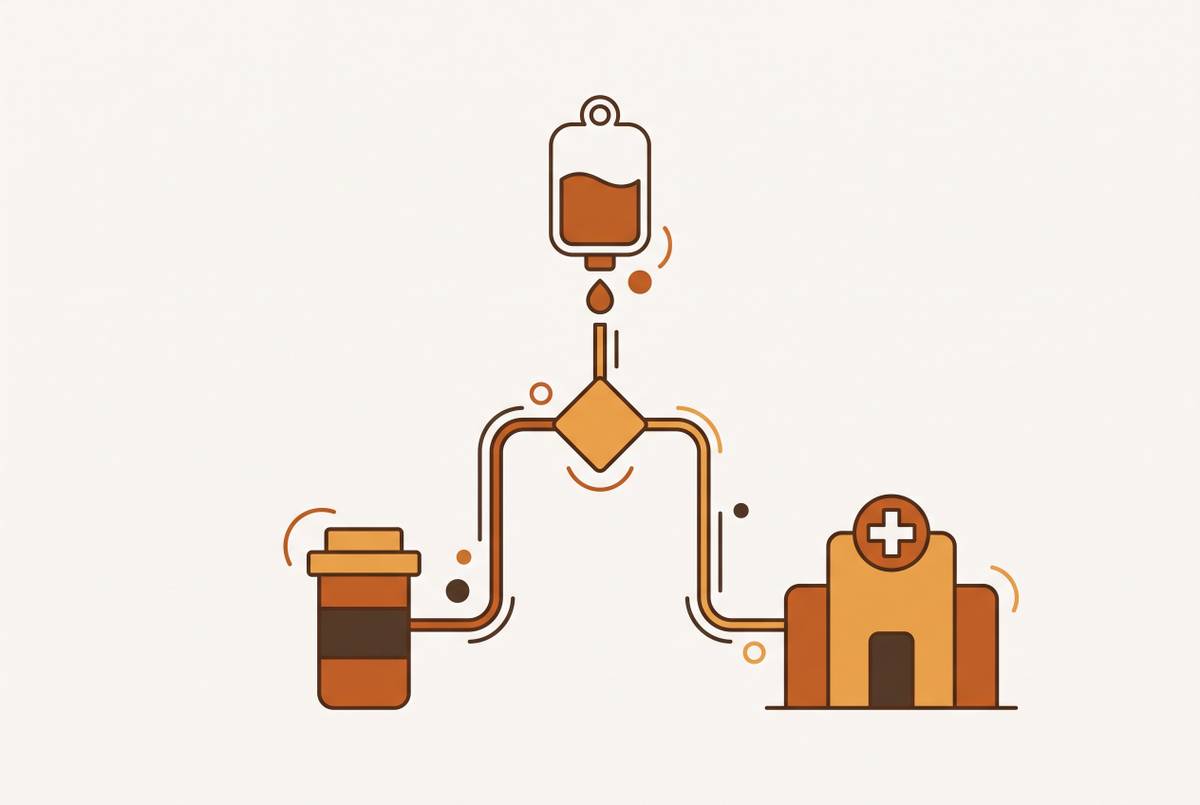
The payment path also depends on who supplies the drug. In buy-and-bill, the provider purchases it and bills for both the drug and administration. In white-bagging, the payer's specialty pharmacy ships it, and the provider bills only for administration. Intake must resolve which model applies to the payer and drug before the patient arrives. Meanwhile, changing reauthorization timelines, lab requirements, dosage caps, and step therapy rules mean that a workflow built around last cycle's requirements can be wrong this cycle.
Eligibility verification failures and what they actually look like in infusion
A coverage check at scheduling describes coverage as of that day, leaving coverage on the treatment date unconfirmed. Between those dates, a plan can lapse, the primary payer can change, or the benefit can exclude the specific infusion drug. A general eligibility response can also miss a site-of-care restriction. The patient may have active insurance but lack coverage for that drug at the infusion center because the plan requires a hospital outpatient department or specialty pharmacy.
Recurring treatment makes the exposure larger than one encounter. A patient on a 12-session biologic course whose coverage lapses in session three can generate multiple denied claims if no one re-verifies coverage between sessions. By the time the first denial arrives, more drugs may already have been administered.
Errors in Coordination of Benefits can also lead to a denial. Many patients receiving high-cost biologics carry both commercial and Medicare or Medicaid coverage, making the order of payment important. When staff bill the secondary payer as primary or miss a secondary payer altogether, the claim goes down the wrong path. Incorrect member IDs and Medicare Beneficiary Identifier errors may remain undetected until adjudication. Their correction then requires retroactive work on encounters that have already happened.
Prior authorization errors that are seeded before the first infusion session
Prior authorization causes more infusion denials than anything else, and the errors usually start before the patient reaches the chair. Infusion and specialty biologics give payers a strong financial reason to scrutinize each requirement. A treatment can be clinically appropriate and still fall outside the approval the practice obtained. The authorization must cover the actual service.
One recurring failure is an authorization that expires mid-treatment. The original approval covers a specific number of sessions, but later sessions proceed after that limit without a valid authorization on file. Another failure starts with outdated payer requirements. A drug that did not require authorization in a prior period may require it now, and payer updates do not always come with notice to the infusion center.
A request without treatment history, current lab values, or medical necessity documentation can be denied regardless of whether the treatment is appropriate. An authorization for one CPT or J-code does not cover a different code on the claim merely because the clinical intent is identical.
Step therapy raises the documentation stakes further. Some payers require proof that the patient tried and failed a lower-cost alternative before approving the preferred biologic. Without that record attached, the request can be denied before the first session is scheduled. Weight-based dosing can then create an authorization gap even after approval. If the dose changes from the quantity authorized at the patient's earlier weight, the administered units may no longer be covered.
Major payers have compressed appeal timelines, while some infusion centers review denials weekly or biweekly. A denial that could have been reversed can become a permanent write-off when its appeal window closes.
Patient demographic and registration errors that survive into claim submission
Registration errors look simpler than authorization errors, but that makes them easy to underestimate. Experian Health's State of Claims 2025 research found that 32% of providers said registration failures were a top cause of denials. These include misspelled names, wrong dates of birth, incorrect member IDs, and mismatched payer information. Payer AI systems can catch these discrepancies automatically before a human reviewer sees the claim. A small entry error can therefore trigger a denial without any review of the treatment itself.
In infusion, the critical mismatch may be between the patient's registration record and an existing authorization. A small difference in the name or member ID can make it look as though there is no valid approval. Referring provider information creates a similar problem when a payer requires the physician on the claim to match the physician on the authorization. Even a formatting difference can produce a denial that reads like an authorization failure. Reusing records from an earlier visit adds another risk when recurring patients change plans, employers, or coverage tiers between cycles.
How J-code and NDC capture errors at intake translate into underpayments and denials
Drug capture errors can produce a less obvious loss than an outright denial. An underpaid claim has been accepted, but it has paid less than it should. In buy-and-bill, that distinction matters because the practice has already absorbed the drug's purchase cost. A payment on the remit does not establish that the drug line paid correctly. Errors hidden in contractual adjustments can make the transaction look finished when revenue is still missing.
The unit calculation is a common point of failure. The administered dose must be divided by the J-code unit size to produce the billing unit count. Dose adjustments, doses split between vials, and rounding at the point of care create opportunities for the recorded count to diverge from the administered quantity. A unit-count error on a high-dose biologic can cause a significant underpayment on one claim. If staff keep making the same calculation error, the practice can lose money on more of its infusions.
An incorrect or missing NDC can instead cause a denial or a zero-payment remit. That error originates when the drug is pulled and documented. A mismatch between the authorized drug or units and the administered record can also appear as an authorization denial, obscuring its drug-capture origin. Misclassifying a white-bagging encounter as buy-and-bill, or the reverse, can produce an incorrect drug claim or leave a needed drug claim unsubmitted. These failures explain why payment review at the claim total is not enough to establish whether each line paid at the contracted rate.
Why these errors survive undetected from intake to remit
The common weakness is separation between the people entering information and the people discovering that it was wrong. Intake and billing often use different systems with no way to share feedback in real time. Billing staff may have to collect claim information from multiple solutions, with no early view of an error entered at scheduling. This workflow allows an assumption to travel without being tested.
Several weeks can pass between scheduling, the authorization request, or the drug order and claim submission. By discovery, the encounter is complete, and retroactive authorization is often unavailable. Faster payer adjudication does not close that upstream gap because it still acts after submission. Instead, automated denials add pressure to the narrow appeal deadlines, with some major-payer timelines now measured in days.
The feedback that reaches intake can also be too broad to help. A category called prior authorization denials groups expired approvals, coding mismatches, and missing step therapy documentation together. Each has a different cause and needs a different upstream correction. Inovalon's August 2026 survey found that demographic validation and eligibility monitoring were among the top ways to prevent denials, while prior authorization automation was near the bottom of the list. The gap is not simply knowing that front-end errors matter, but organizing prevention around the specific ways they happen.
Where in the intake workflow infusion practices can intervene before the claim is built
Eligibility control belongs both at scheduling and close to the service date. Practices can re-verify coverage and plan-specific benefits then, with another check built into the start of each new authorization period for recurring patients. Staff should start authorization work before the treatment cycle and track when approvals expire against the number of sessions scheduled. Reauthorization triggers belong before the approved limit is reached. Keeping a log of each payer's requirements up to date helps staff do that work better than checking the rules only when the contract is renewed.
Registration needs its own checkpoint at each visit. Re-capturing demographic and insurance data keeps a recurring schedule from becoming a reason to reuse stale records. Before submission, the patient's name, member ID, and referring provider should match the authorization exactly. For drug capture, staff need to check the record of the drug given against the billing unit count separately before the claim is built. A dose adjustment should trigger billing review at that point.
Prevention also needs feedback from payment. Checking what each line on the remittance paid against contracted rates can reveal underpayments missed when staff review the claim as a whole. Posted contractual adjustments should remain a review category within the payer's dispute window, keeping the transaction open for review. That work connects what was captured before submission with what the payer actually paid, making the remit a source of upstream correction.
These controls depend on an intake-to-remit workflow that combines software with experienced operators embedded in the work. Schedulers, authorization staff, clinical documentation staff, and billing need a real-time connection for the checks to function as designed. Separate systems and organizational silos weaken even a sound checklist. Workflow design is what separates preventing denials from managing them after treatment. Intake is where infusion revenue is won or lost.